Published: August 17, 2026
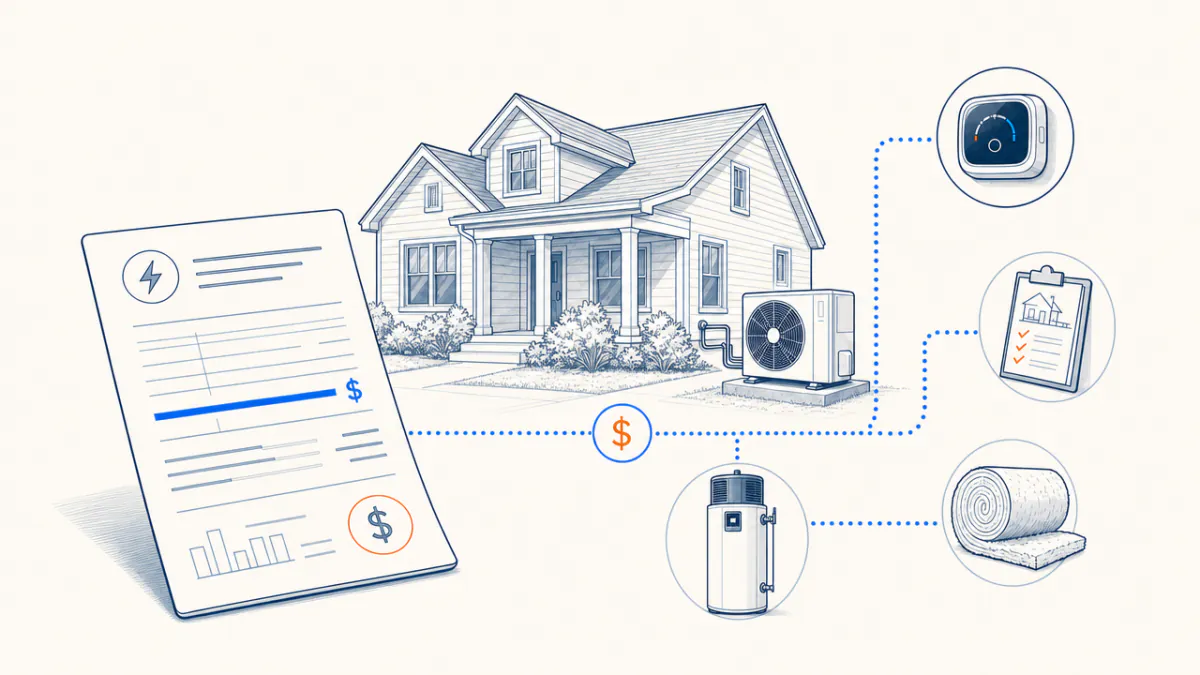
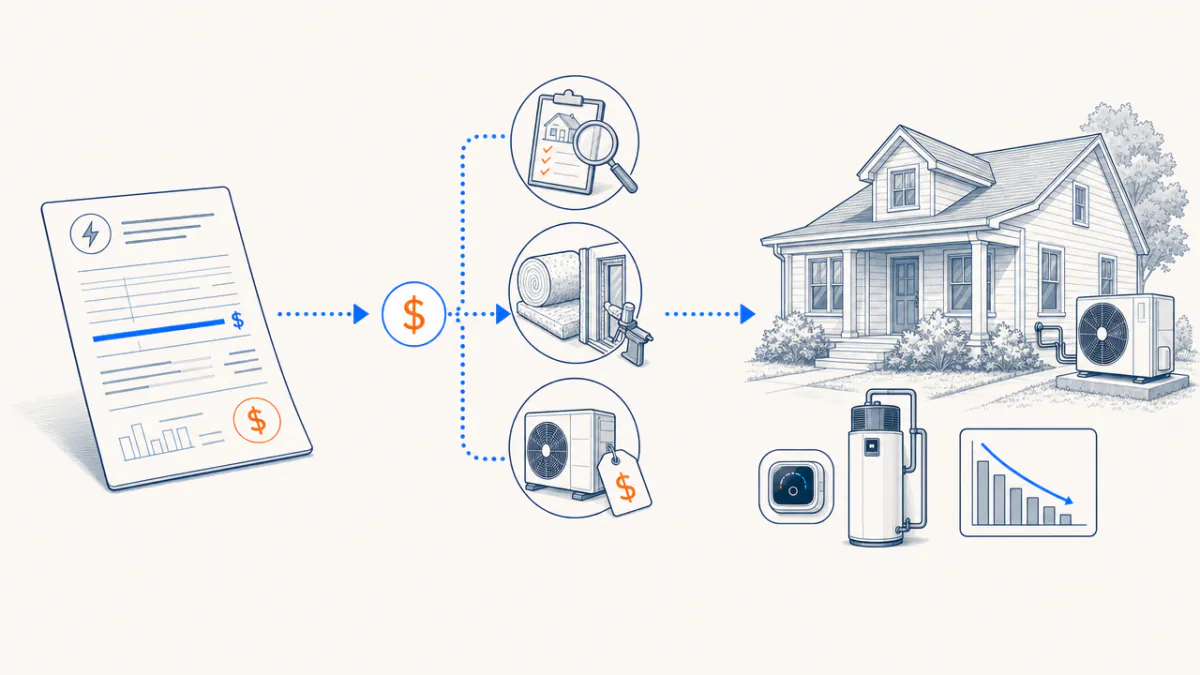
That EmPOWER line on a Maryland utility bill can look like a fee with no obvious benefit. It funds statewide energy programs, but the money is accessed through utility-specific portals and a separate limited-income application. The route changes what work qualifies, when approval must happen, and whether the incentive arrives as a discount or reimbursement. A successful claim connects the current charge, live program options, federal rebate status, eligibility rules, and 2027 changes to the right application before work starts.
What EmPOWER Maryland is
EmPOWER Maryland is the state's ratepayer-funded energy efficiency, conservation, demand response, and electrification program. The General Assembly created it in 2008. Maryland's participating utilities run most residential and business offerings, the Department of Housing and Community Development (DHCD) runs the limited-income programs, and the Public Service Commission (PSC) approves and oversees the plans.
There is no statewide EmPOWER login, universal rebate chart, or single application. A BGE customer uses BGE's program, a Pepco customer uses Pepco's program, and an income-qualified household uses DHCD's separate route.
EmPOWER reaches well beyond appliance promotions. The PSC's 2025 report records 19 million megawatt-hours of energy savings, 3,952 megawatts of peak-demand reduction, and about 154.5 million efficiency measures through the end of 2025. DHCD and utility limited-income programs had also served 103,234 customers.
Maryland's Office of People's Counsel calculated a 2025 efficiency cost of 6.2 cents per kilowatt-hour, below the combined supply and delivery rates paid by most customers. Its 2025 program review found that every utility except Washington Gas reached its minimum greenhouse-gas reduction goal.
How the EmPOWER Maryland charge works
The EmPOWER charge is a mandatory utility delivery charge. It is based on usage, so a household that uses more electricity pays more into the program that month. Choosing a third-party energy supplier does not remove it because the local utility still delivers the energy.
For an electric bill, the calculation is:
EmPOWER rate per kWh × monthly kWh use = monthly EmPOWER charge
The August 2026 residential rates posted by the Office of People's Counsel produce these charges at 900 kWh:
| Electric utility | EmPOWER rate | Charge at 900 kWh |
|---|---|---|
| BGE rate page | $0.01310/kWh | $11.79 |
| Delmarva Power rates | $0.020055/kWh | $18.05 |
| Pepco rate page | $0.020618/kWh | $18.56 |
| Potomac Edison rates | $0.01376/kWh | $12.38 |
| SMECO rate page | $0.01398/kWh | $12.58 |
BGE and Washington Gas also have gas-side EmPOWER rates in August 2026. At 50 therms, BGE's $0.0712-per-therm rate adds $3.56 and Washington Gas's $0.0739 rate adds about $3.70.
The electric charge rose sharply for some customers in 2026 partly because Maryland changed how program costs are recovered. New costs are collected as they are incurred while older deferred balances are also being paid down. The PSC described 2026 as the peak year under that schedule.
Relief begins in 2027. The Utility RELIEF Act directs $100 million from the Strategic Energy Investment Fund to offset residential electric EmPOWER charges in equal monthly installments throughout 2027. It also reduces the 2027 to 2029 program cycle. The credit lowers the surcharge. It is not a separate $100 million home-rebate fund. The OPC's RELIEF Act FAQ explains the credit and program cuts.
What EmPOWER Maryland can pay for
EmPOWER is an umbrella for several program types. The useful route depends on the home, project, and account holder.
| Your goal | Typical EmPOWER route | What it can provide |
|---|---|---|
| Find easy savings | Quick Home Energy Check-up | A no-additional-cost visual walkthrough, a custom report, and eligible items such as LEDs, aerators, weatherstripping, or a smart thermostat |
| Solve insulation, drafts, or uneven temperatures | Home Performance with ENERGY STAR | A diagnostic assessment, improvement plan, and rebates tied to modeled savings and job cost |
| Replace an appliance or HVAC system | Equipment rebate or participating-contractor discount | Incentives for qualifying heat pumps, heat pump water heaters, smart thermostats, and other efficient equipment |
| Replace fossil-fuel equipment with electric equipment | Utility electrification program | Added incentives for eligible heat pumps, water heaters, and electrical work during the 2026 cycle |
| Earn money for reducing peak demand | Demand-response program | Bill credits or rewards for allowing limited thermostat or equipment adjustments during high-demand events |
| Make upgrades on a limited income | DHCD EmPOWER program | An energy audit and eligible efficiency, health, and safety work at no charge |
| Improve a business or multifamily building | Utility commercial or multifamily program | Prescriptive or custom incentives, direct-install work, tune-ups, or technical assistance |
There is no single statewide rebate amount. Whole-home rebates are calculated from the energy savings modeled during the assessment. A utility may advertise a maximum of $10,000 for eligible work or $15,000 for an electrification project, but those figures are caps. The approved amount can be lower, may be limited to 75% of job cost, and depends on territory, funding, scope, contractor, equipment, and completion date.
Appliance incentives use different mechanics. Some are instant retailer discounts, some pass through participating distributors or contractors, and some are reimbursements submitted after purchase. A product cannot receive both an instant discount and a mail-in rebate when the terms prohibit duplicate payment.
For one equipment example, our BGE water heater rebate guide breaks down the utility's current heat pump water heater purchase paths and separate electrification incentives.
Federal rebate and tax-credit status as of August 12, 2026
Maryland's federal Home Efficiency Rebates, often called HOMES and branded HERO by the state, and High-Efficiency Electric Home Rebates, or HEEHR, are not open to homeowners. There is no live Maryland homeowner application and no guaranteed Maryland rebate amount to put into a project budget.
DOE conditionally approved Maryland's applications, but additional approvals are required before funding and launch. After DOE issued new notices on June 1, 2026, the Maryland Energy Administration said it was reassessing both programs and their design.
The biggest change affects HEEHR. DOE's new HEEHR program notice removed the prior allowance for replacing non-electric equipment with electric equipment. The revised federal path allows qualifying upgrades from existing electric HVAC or appliances to more efficient electric equipment, plus eligible new construction. That reversal means older Maryland material describing federal rebates for a gas-, oil-, or propane-to-electric conversion no longer reflects the launch rules. EmPOWER's live 2026 utility electrification offers are separate from HEEHR and retain their own fuel-switching terms.
Federal tax credits also changed. The 25C Energy Efficient Home Improvement Credit does not cover property placed in service after December 31, 2025. The 25D Residential Clean Energy Credit does not cover expenditures after that date, and installation completion generally determines when an expenditure is made. The IRS expiration rules therefore exclude home energy property completed in 2026 from those two credits.
Our heat pump rebates by state page separates live state and utility offers from federal programs that have not launched.
Where to apply: August 12, 2026 utility crosswalk
Use the distribution utility named on the bill, even when another company supplies the electricity or gas. These pathways and examples were available on August 12, 2026.
| Utility | Verified homeowner path or example | Main gate or deadline |
|---|---|---|
| BGE residential programs | Home Performance starts with a $100 customer assessment for a typical eligible home. Modeled rebates can reach $10,000, or $15,000 for an eligible electrification scope, subject to the 75% job-cost cap. | Active BGE residential electric account, eligible owner-occupied home, participating contractor, approved modeling, and final test-out. |
| Delmarva Maryland programs | A typical Home Energy Assessment costs $100; eligible whole-home improvements can receive modeled rebates up to $10,000. | Active Delmarva residential account, property ownership, participating contractor, qualifying scope, and available funding. |
| Pepco Maryland programs | A typical assessment costs $100. Eligible work can receive up to $10,000, or up to $15,000 for the limited-time electrification path. | For the electrification offer, a participating contractor must reserve the rebate by August 31, 2026; approved work is due within 90 days of reservation approval. |
| Potomac Edison programs | The switch-to-electric path offers up to $2,500 for a qualifying heat pump water heater plus up to $3,000 for eligible electrical make-ready work. | Potomac Edison Maryland residential account, qualifying ENERGY STAR model, participating contractor for the installed discount, and completion by December 31, 2026, while funds last. |
| SMECO residential programs | Home Energy Improvement begins at no additional cost; the program says upgrade rebates average about $3,000, with a $15,000 maximum for eligible fuel-switch projects. | SMECO service address, program assessment and contractor path, qualifying scope, available funding, and 2026 program rules. |
| Washington Gas rebates | Maryland rebates remain for qualifying high-efficiency gas furnaces, water heaters, and other listed measures during 2026. | Maryland service territory, exact efficiency and model requirements, completed documentation, and rebate issuance no later than December 31, 2026. |
| Choptank efficiency resources | Choptank joined the EmPOWER framework, but its public page still provides general efficiency and assistance resources rather than the established utilities' full rebate menu. | Benefits depend on the portfolio approved and launched for Choptank members. |
These advertised figures are ceilings, not guaranteed payments. A reservation can also expire, funding can run out, and an otherwise efficient product can fail a utility's exact model or matched-system rule.
Limited-income eligibility and income limits
The DHCD EmPOWER Maryland Limited Income Energy Efficiency Program installs eligible measures at no charge. A household needs an account with BGE, Delmarva Power, Potomac Edison/FirstEnergy, Pepco, SMECO, or Washington Gas and must meet the income rules.
The current maximum gross annual household incomes are:
| Household size | Maximum annual income |
|---|---|
| 1 | $74,800 |
| 2 | $85,450 |
| 3 | $96,150 |
| 4 | $106,800 |
| 5 | $115,350 |
| 6 | $123,900 |
| 7 | $132,450 |
| 8 | $141,000 |
| 9 | $153,500 |
| 10 | $167,700 |
DHCD's current income table also accepts participation in several assistance programs as proof of eligibility. These include OHEP utility assistance, SNAP, TANF, Supplemental Security Income, Medicaid, HUD housing assistance, and several DHCD and Baltimore programs.
After approval, a local agency arranges the energy audit, develops the scope, schedules the contractor, and inspects completed work. Eligible measures can include attic, floor, and wall insulation, hot-water improvements, lighting, furnace service and safety repairs, refrigerator work, and related health and safety items.
Renter-occupied homes can participate with property-owner permission for building work. Standard utility programs remain available to many households above the DHCD limits because basic eligibility usually turns on the utility account and property type rather than household income.
A rebate-safe application file
The order of operations matters more than the headline amount. Build the application record before a purchase or signed work order:
- Establish the account and property. Keep a recent utility bill or account number, service address, account-holder name, property type, and owner or landlord authorization when required. The service address must sit inside the offer's utility territory.
- Choose the program path and participating contractor. A quick check-up, whole-home project, equipment discount, and DHCD project use different networks. Home Performance and many installed HVAC discounts require a contractor listed by that specific utility.
- Lock the eligible scope and equipment. Record the manufacturer, full model and serial numbers, and required efficiency evidence. HVAC programs can require an AHRI certificate for the exact matched indoor and outdoor system. Appliance and water-heater offers can require an exact ENERGY STAR-listed model. For fuel-switch offers, retain proof of the existing fuel and equipment being replaced.
- Obtain reservation or preapproval when the path requires it. The written record should show the approved scope, modeled incentive, reservation number, funding status, expiration date, and the party that receives payment. A quote is not a reservation.
- Finish within the approved window. Keep the signed contract, change orders, locally required permits and inspection approvals, commissioning records, and Home Performance test-out results. The final installed scope must match the approved scope or documented changes.
- Close the payment packet. Retain itemized invoices, proof of payment, purchase and installation dates, receipts, equipment labels, and required customer signatures. Put in writing whether the contractor, distributor, retailer, or homeowner submits the final claim and who responds if the program requests a correction.
The proposal should show the gross contract price, each incentive, customer payment, and any assessment or test-out fee on separate lines. Our quote comparison guide provides a clean format.
Before signing, get written answers to four questions:
- Is the incentive reserved, and when does the reservation expire?
- Is the amount fixed or dependent on final modeled savings and the test-out?
- Who submits each document, who receives the incentive, and when is payment due?
- What happens to the contract price if the approved incentive is lower?
This record also prevents double counting. A retailer discount, utility rebate, and state grant should appear as separate lines with separate eligibility rules. Our incentive stacking guide explains how to keep those paths distinct.
What changes in 2027
EmPOWER Maryland continues after 2026, but the program mix will change.
The enacted Utility RELIEF Act, Chapter 353, sets electric-company targets at 1.75% for 2027 through 2029, 2% for 2030 through 2032, 2.25% for 2033 through 2035, and 2.5% beginning in 2036. It also allows qualifying community and distribution-connected solar generation to count toward as much as 20% of an electric utility's target during 2027 through 2029.
Three practical changes follow:
- Electric utility rebates and assessments continue, although 2027 offers, caps, and funding depend on the approved next-cycle plans.
- BGE and Washington Gas must stop new gas-utility EmPOWER programs at the end of 2026. Gas utilities may keep recovering reasonably incurred 2026 and prior program costs through their surcharges until those balances are recovered.
- Residential electric customers receive the $100 million surcharge offset through monthly 2027 credits, subject to the PSC's allocation process.
Frequently asked questions
Is EmPOWER Maryland legitimate?
Yes. It is a state-created program regulated by the Maryland Public Service Commission. Utilities and DHCD deliver benefits through approved contractors and program vendors. Use the contractor directory inside the relevant utility program instead of relying on an unsolicited claim that a company is “with EmPOWER.”
Can I opt out of the EmPOWER Maryland charge?
No. The surcharge is part of the approved utility rate and is paid by covered customers based on energy use. Enrollment in a demand-response program is separate and can be voluntary, but declining that program does not remove the charge.
Is there one EmPOWER Maryland application or phone number?
No. Standard programs use the utility links above. The DHCD limited-income program has its own application and Maryland toll-free intake number, 1-855-583-8976.
Can renters use EmPOWER Maryland?
Yes, depending on the program. Renters can use some quick check-ups and limited-income services, and multifamily properties have separate offerings. Building work requires the property owner's consent. Some whole-home programs also require the utility account holder or written landlord permission.
Is EmPOWER Maryland connected to the Empower rideshare app?
No. The energy program and rideshare company are unrelated. EmPOWER Maryland is the utility-funded efficiency program described here.
Can an EmPOWER rebate be combined with another incentive?
Sometimes. The utility rebate and state program each retain their own cost, timing, and duplication rules. An instant discount cannot also be claimed as a second rebate on the same purchase when the terms prohibit duplicate incentives. Federal 25C and 25D credits do not apply to projects completed in 2026.
Planning a water-heater upgrade in BGE territory? Start with our BGE rebate guide before placing the order.
Fast application checklist
- Establish the account and property. Keep a recent utility bill or account number, service address, account-holder name, property type, and owner or landlord authorization when required.
- Choose the program path and participating contractor. A quick check-up, whole-home project, equipment discount, and DHCD project use different networks.
- Lock the eligible scope and equipment. Record the manufacturer, full model and serial numbers, and required efficiency evidence.
- Obtain reservation or preapproval when the path requires it. The written record should show the approved scope, modeled incentive, reservation number, funding status, expiration date, and the party that receives payment.
- Finish within the approved window. Keep the signed contract, change orders, locally required permits and inspection approvals, commissioning records, and Home Performance test-out results.
- Close the payment packet. Retain itemized invoices, proof of payment, purchase and installation dates, receipts, equipment labels, and required customer signatures.