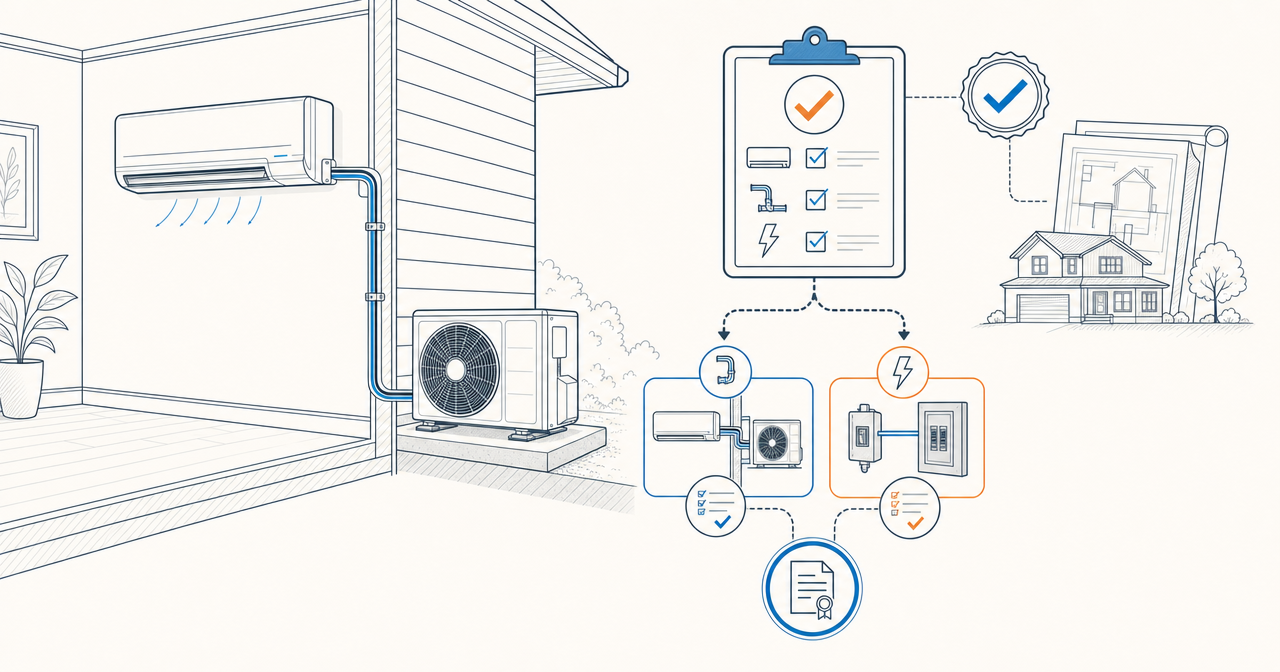
Do You Need a Permit to Install a Mini Split?
Last reviewed: 2026-05-28 (UTC)
Usually yes.
If you are installing a fixed ductless mini split system, the safe planning assumption is that the job needs a permit and inspection unless your local building department says otherwise.
In most places, the first permit bucket is a mechanical permit, not a generic building permit. Many installs also involve electrical work, and some get more complicated if the outdoor-unit location or the surrounding project scope widens the job.
That may sound like overkill for a mini split, but it is not the same as plugging in a room air conditioner. A real mini split installation usually involves refrigerant tubing, electrical wiring, condensate drainage, wall penetrations, and an outdoor condenser that has to be mounted correctly.
Your local building department or authority having jurisdiction is the final source of truth. This guide is for planning, not legal, code, or electrical advice.
Quick answer
| Question | Practical answer |
|---|---|
| Do I need a permit to install a mini split? | Usually yes. |
| What kind of permit is it? | Usually a mechanical permit first, with electrical permits often added. |
| Can a homeowner pull the permit? | Sometimes, but the installer or licensed contractor usually should handle it. |
| Will there be an inspection? | Usually yes, and final approval is what closes the job. |
| What can make the project bigger? | New electrical work, panel-capacity questions, outdoor-unit siting, or a larger bundled remodel. |
| How long and how much can it vary? | A lot. Simple permits can move fast, while reviewed jobs can take much longer and fees vary by city and scope. |
When a mini split permit is usually required
A mini split is usually treated as fixed HVAC equipment, not as a plug-in appliance.
Portland's residential permit guidance is unusually direct here: it lists mini split systems among the common home projects that require a mechanical permit. Los Angeles says mechanical HVAC permits are required for installation or modification of heating and cooling systems. Seattle uses the same basic framing and says a mechanical permit enables installation of HVAC equipment.
Those are local examples, not one national code rule. But they support the same homeowner planning answer: if the project installs a new ductless mini split system, assume it is permit work.
This is also why the phrase building permit can be misleading for this query. Many homeowners use it as a catch-all term, but official pages often sort the core mini split work into the mechanical-permit lane instead.
What permit types can apply to a mini split install
For most homeowners, the cleanest way to think about the permit stack is:
- mechanical permit first,
- electrical permit often added, and
- extra review only when the job widens beyond the core equipment install.
Portland makes the first two parts clear. The city says a mechanical permit is still required even if a building permit is not, and it also says most mechanical-equipment projects need an electrical permit too.
That does not mean every mini split project automatically triggers every permit category. It does mean you should not assume there is only one form involved. Oregon's residential permit guidance reinforces the same point by treating mechanical and electrical changes as separate permit categories.
In practice, these are the questions that matter most before you approve the quote:
- Is this a mechanical permit only, or mechanical plus electrical?
- Does the quote include a new circuit, disconnect, or other electrical changes?
- Is any panel-capacity or service work expected?
- Could the outdoor-unit location trigger setback or screening rules?
That last point is easy to miss. Portland's residential guidance says outdoor mechanical equipment is not allowed in the required front setback, and side or rear setback placements can still carry screening and height conditions. So even when the indoor scope feels simple, the condenser location can create a real planning issue.
If your mini split quote also includes panel work or service-capacity upgrades, Watt Wallet's electric panel tax credit guide can help you separate the tax-credit question from the permit question.
Why mini splits are treated as permit work
A mini split install touches more than one system detail that local inspectors care about.
PNNL's ductless mini split code-compliance brief is useful because it shows what is actually being checked in the field. On a typical installation, inspectors may verify:
- wall penetrations,
- outdoor-unit supports,
- condensate disposal,
- refrigerant piping insulation, and
- locking access-port caps.
That list helps explain why a mini split is usually permit work even though it can look simple from the outside. The system is still a permanent HVAC installation with real code, safety, and durability details that need to be right.
A simpler contractor permit path is not the same as no permit
This is one of the biggest myths around mini split installations.
Sometimes a contractor is talking about a simplified permit path, not a true exemption from permitting.
Oregon's mechanical minor-label program is a good example. It allows licensed contractors to use a simplified permit path for installing new mini split heat pumps in one- and two-family dwellings. Coos County's mini split notice adds the reality check: it reinstated the requirement for mini split and ductless heat pump permits, then pointed licensed contractors to that same minor-label option.
That is the right homeowner mental model. Easier permit paperwork is still permit paperwork.
If an installer tells you the job does not need a permit because they use a label, an express process, or a contractor shortcut, ask three direct questions:
- What exact permit or label is being pulled?
- Is an inspection still required?
- What document shows the permit was actually closed out?
Who usually pulls the permit, and can homeowners do it themselves?
In many cases, the licensed contractor or installer should be the one handling the permit.
Portland says homeowners can do their own mechanical work if they are the recorded owner. The same guidance also says contractors doing mechanical work must hold an Oregon CCB license and list it on the permit application. Oregon's residential permit guidance adds another useful rule of thumb: the person performing the work is responsible for obtaining the permit.
So yes, some jurisdictions let homeowners pull permits for work on their own homes. But that does not mean a homeowner-pulled permit is the best default.
When the homeowner pulls the permit, the homeowner often becomes the person responsible for:
- making sure the application is correct,
- keeping permit paperwork available,
- scheduling the inspection,
- handling corrections if the inspector finds issues, and
- making sure the permit actually closes.
For most people, the cleaner path is to make permit handling part of the installation contract and confirm exactly which permits are included.
What inspection and closeout usually look like
The permit is not really finished when the mini split turns on. It is finished when the required inspections happen and the permit closes.
Seattle's mechanical inspection guidance is especially useful here. It says residential refrigeration inspections include heat pumps, air conditioners, and mini split systems, and that the inspection should happen after rough-in but before any part of the system is covered.
That timing matters. If the line set, wiring, or penetrations get covered too early, the inspector may not be able to see the work they need to approve.
Portland adds the closeout piece. The city says a final mechanical inspection is required for approval and that a permit stays under inspection until that final occurs.
For homeowners, the practical takeaway is simple: installed and closed out are not the same thing.
Ask your installer:
- when the inspection will happen,
- who schedules it,
- whether anyone needs to be onsite, and
- what marks the permit as complete.
How permit timing and cost can vary
There is no one national mini split permit fee, and there is no single timeline you can safely use for every city.
What you can do is use official local examples to understand the range.
Portland says a residential mechanical permit application takes about 15 minutes to complete and that permits are issued within 24 hours after payment. Seattle shows the other end of the range: some simple projects can be issued within 24 hours, but many projects should plan for a longer review path.
That is why the right planning question is not What does a mini split permit cost nationally? It is:
- what does my city charge,
- is the permit fee included in the quote,
- does the quote include both mechanical and electrical permits if needed, and
- is the job simple enough to move quickly or big enough to need more review?
The more the install touches electrical scope, outdoor-unit siting constraints, or other project work, the less useful a generic internet estimate becomes.
Questions to ask before you approve the quote
Before you approve a mini split install, ask these questions plainly:
Is permit handling included in this quote?
You want to know whether permit work is already part of the install price or whether it will show up later as an add-on.
Which permits are included?
Do not stop at the word permit. Ask whether the quote includes the mechanical permit only or the electrical permit too.
Who is pulling the permit and scheduling the inspection?
The answer should be specific, not vague. Someone should own the paperwork, the inspection call, and the closeout.
Does the job require new electrical work or a panel-capacity review?
Many mini split projects stay simple. Others expose a circuit, disconnect, or panel issue that changes both budget and timing.
Where is the outdoor unit going?
Outdoor-unit placement can matter more than homeowners expect if your city has setback, height, or screening rules.
What happens if the inspector wants a correction?
You want to know whether return trips, fixes, and reinspection are already covered in the contract.
If you are comparing multiple installer bids, Watt Wallet's guide to comparing rebates, tax credits, and installer quotes is the best next step.
FAQ
Do you need a permit to install a mini split in most places?
Usually yes. For a fixed ductless mini split system, the safe planning assumption is that you need a permit unless your local building department says otherwise.
What permit is needed for a mini split?
Usually a mechanical permit first. Many jobs also add electrical permit requirements when the installation includes new wiring or other electrical changes.
Can a homeowner install a mini split without a permit?
Do not assume that is allowed. Some jurisdictions let homeowners pull permits for work on their own homes, but that is different from skipping the permit entirely. For a fixed HVAC install, no permit is usually the risky assumption.
Does a mini split need an electrical permit?
Often, yes. Portland's guidance says most mechanical-equipment projects also need an electrical permit. The exact trigger depends on local rules and the electrical scope of the install.
How long does the permit process take?
It depends on the city and the project scope. Some simple permits move in a day, while more reviewed jobs take much longer. That is why you should ask your installer what the local timeline looks like for your exact job.
Bottom line
If you are installing a fixed ductless mini split, the smart default is to plan for a permit and inspection.
The most common path is a mechanical permit first, with electrical permits often added when the job includes new wiring or other electrical scope. Contractor label programs or simplified filing paths can make the paperwork easier, but they usually do not remove the permit requirement entirely.
Before you approve the quote, confirm who is pulling the permit, whether electrical work is included, where the outdoor unit is going, and what inspection closeout will look like. If incentives are part of the project too, keep going with Watt Wallet's heat pump rebates by state page.
Sources
- - Portland Bureau of Development Services: Residential mechanical permits
- - Oregon Building Codes Division: Residential permits
- - Oregon Building Codes Division: Mechanical minor labels
- - Coos County: Reinstatement of mini split heat pump permits
- - Seattle Department of Construction and Inspections: Mechanical permit
- - Seattle Department of Construction and Inspections: Mechanical inspections
- - Los Angeles Department of Building and Safety: Mechanical HVAC permits
- - Pacific Northwest National Laboratory: Ductless mini split heat pumps code compliance brief