Last reviewed: September 29, 2026
Dryer circuit breaker size at a glance
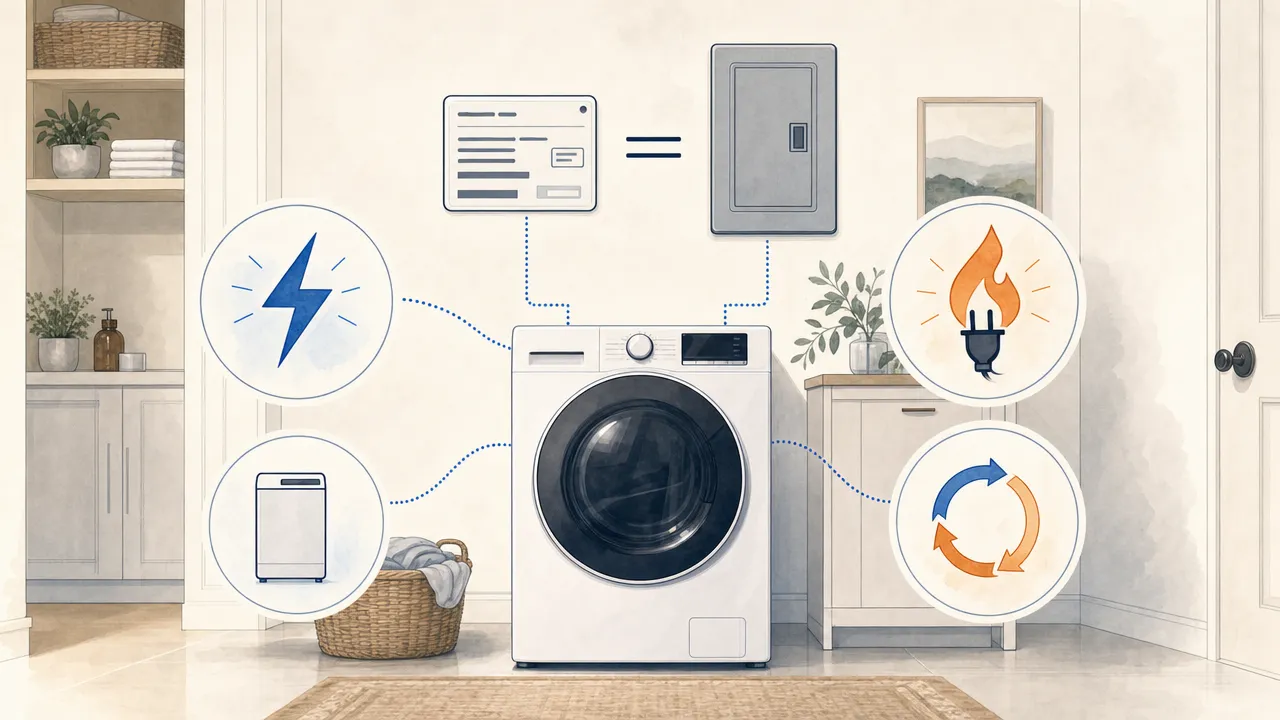
For a conventional full-size 208/240-volt electric dryer, 30-amp protection on an individual circuit is common. That number is not a universal rule for every dryer.
Dryer type: Conventional full-size electric
Common planning pattern: Many 208/240-volt models use a 30-amp individual circuit
What controls the final answer: The model nameplate, installation instructions, listed cord or connection method, and locally adopted code
Dryer type: Gas
Common planning pattern: Many models use a 120-volt individual circuit protected at 15 or 20 amps
What controls the final answer: The gas dryer's exact electrical rating and the home's grounding, receptacle, and local requirements
Dryer type: Compact or 120-volt electric
Common planning pattern: Some compact models use a 120-volt, 15- or 20-amp supply
What controls the final answer: The exact model; some space-saving electric models are still 208/240 volts
Dryer type: Heat pump
Common planning pattern: No category-wide breaker size
What controls the final answer: The model's voltage, marked current or circuit requirement, included connection method, and installation instructions
GE's typical requirements list 30-amp protection for its 208/240-volt electric dryers, 15- or 20-amp protection for its 120-volt gas and compact 120-volt electric dryers, and a separate 30-amp pattern for its 208/240-volt space-saving models. Those are manufacturer examples, not a universal dryer standard. GE's electrical-requirements table directs owners to the exact installation instructions.
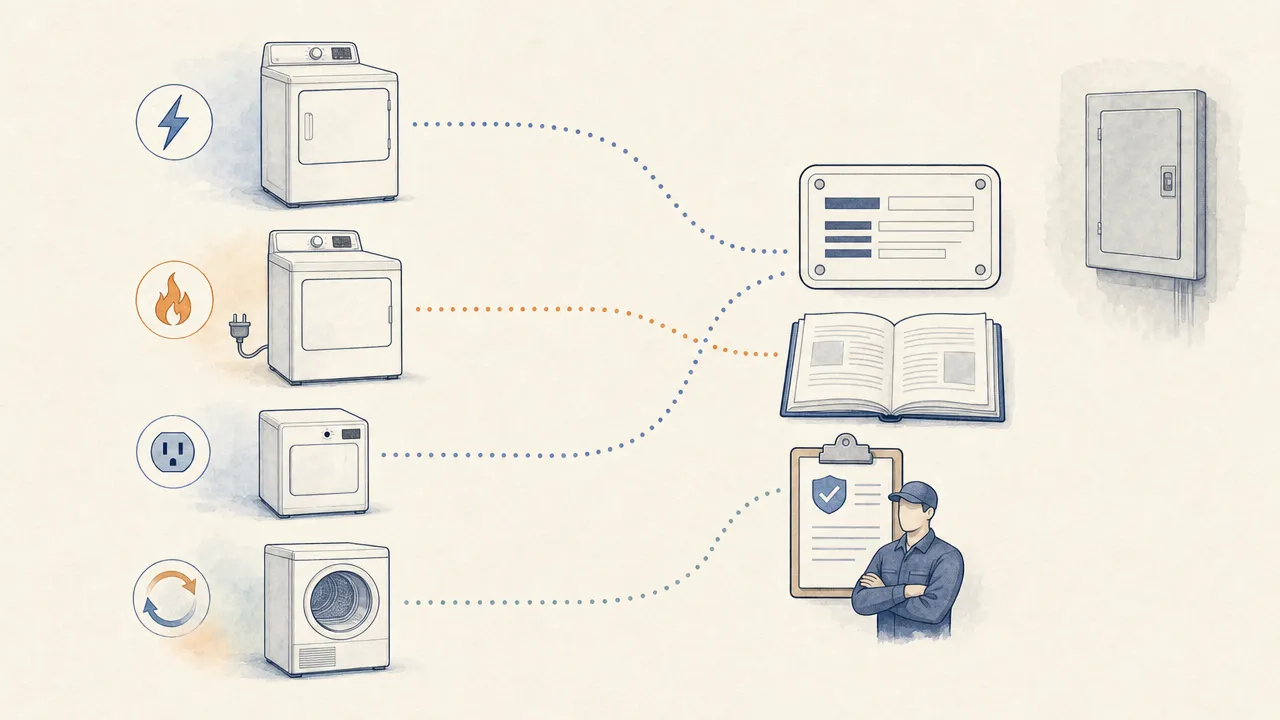
Simplified layout, not wiring instructions.
Why 30 amps is common for conventional electric dryers
Conventional electric dryers use a heating system that usually needs more power than the motor and controls alone. A 208/240-volt supply lets a full-size electric dryer deliver that heat without using the same type of 120-volt circuit found in many ordinary household receptacles.
That is why a 30-amp individual circuit appears frequently in full-size electric dryer instructions. GE's published examples show 208-volt dryers running at about 22 to 23 amps and 240-volt dryers running at about 24 to 25 amps, with a 30-amp breaker listed for those models. The number still belongs to the specific appliance and installation, so do not select a breaker from the dryer's size, brand, or the fact that a previous dryer used 30 amps.
A different electric dryer may have a smaller or larger marked requirement. A combination washer-dryer, a commercial unit, a compact model, or a model designed for a different voltage can change the answer. The nameplate and installation manual take priority over a general table.
Gas, compact, and heat-pump dryers do not follow the same rule
Gas dryers
A gas dryer still needs electricity for controls, the motor, and other components. The gas connection does not turn the dryer into a zero-electricity appliance.
Many residential gas dryers use a 120-volt individual circuit with 15- or 20-amp protection. GE lists that pattern for its gas dryers, while some model instructions specify one exact rating. The gas line, connector, venting, shutoff, combustion, and leak checks are separate installation questions. Coordinate those items with the qualified appliance or gas professional described in the manufacturer's instructions.
A gas dryer should not be treated as a reason to reuse any nearby outlet without an electrician confirming the circuit, grounding, condition, and local requirements. The washer may also have its own electrical requirement.
Compact and 120-volt electric dryers
The label “electric dryer” does not tell you whether the appliance needs 120 volts or 208/240 volts. Compact and space-saving products are where that shortcut causes the most confusion.
Some compact electric dryers are designed for a 120-volt supply and a smaller individual circuit. Other space-saving electric dryers use 208/240 volts and a 30-amp pattern. A compact cabinet, stackable design, or lower capacity does not prove the circuit requirement.
Read the model number and electrical block on the nameplate. If the retailer lists only a product family, ask for the exact model before scheduling delivery or electrical work.
Heat-pump dryers
Heat-pump technology describes how the dryer moves and reuses heat. It does not set one breaker size for every model.
A model-specific Miele T1 specification sheet for named ventless heat-pump models lists a 120-volt, 15-amp requirement and a separate 220-volt, 30-amp option used with a NEMA adapter. The sheet is an older specification document and says its information can change. It is useful for one reason: a heat-pump label alone cannot answer the circuit question. Use the current nameplate and installation instructions for the exact dryer you are buying. Miele's T1 specification sheet is an example of why model-specific documentation matters.
Do not convert the marked running current into a breaker choice yourself. The listed circuit requirement can depend on the product design, connection method, supply voltage, and protective-device rules.
The model nameplate and manual control the answer
Before anyone prices electrical work, identify the exact dryer. Collect:
- the manufacturer and complete model number
- a photo or transcription of the electrical nameplate
- rated voltage, frequency, current, watts, and any marked circuit or protective-device requirement
- the current installation instructions, including connection and cord requirements
- whether the power cord is included, sold separately, or restricted to a listed accessory
- whether the dryer is conventional electric, gas, compact, ventless, heat pump, or a washer-dryer combination
- whether the unit is designed for a three-slot or four-slot receptacle, hardwired connection, adapter, or another listed method
- whether the dryer will be stacked, placed in a closet, or installed in a location with unusual access or clearance conditions
A product listing, sales associate, or previous appliance can help you find the model. None replaces the nameplate and manual. Keep the documentation available for the electrician and delivery installer.
Receptacle, cord, conductor, grounding, and bonding
The breaker is only one part of the electrical connection. The receptacle, cord or connection method, conductors, grounding path, bonding, enclosure, and protective devices all have to fit the appliance and the adopted code.
Receptacle and cord
The receptacle shape is a compatibility clue, not a safety certification. A three-slot outlet may be present in an older installation, but its presence does not show that it can be used for a new or altered installation. A conventional electric dryer may use a three-slot or four-slot arrangement depending on the existing installation, model instructions, and local rules. A 120-volt dryer uses a different connection pattern from a 208/240-volt dryer.
Do not install an adapter, change a receptacle, swap a cord, or reuse an old cord based on a generic internet chart. GE says dryer cords are often sold separately because state and local wiring rules vary and because the correct cord depends on the home's wiring. GE also does not recommend reusing an existing cord. GE's power-cord guidance is a useful reminder to settle the cord question before delivery.
Ask the electrician to identify the exact receptacle and cord or connection method in the written quote. If the existing outlet is loose, warm, discolored, cracked, or damaged, leave the dryer unplugged and arrange an inspection.
Conductors and terminations
Do not choose conductor size from the breaker number, a wire chart, or the dryer's wattage alone. The electrician needs to verify the conductor material and type, ampacity under the installation conditions, routing, length, terminations, panel compatibility, and the appliance connection instructions.
You can ask for those items in the quote without opening the panel or inspecting the wiring yourself. The quote should state whether existing conductors can remain, what correction is needed, and who is responsible for permit and inspection work.
Grounding and bonding
A three-prong plug or a four-prong plug does not prove that the circuit is correctly grounded or bonded. Older dryer installations may have a different configuration from a new circuit, and the correct treatment depends on the existing equipment, the alteration, the appliance instructions, and the adopted code.
Have the electrician confirm the equipment grounding path, neutral and grounding relationships, bonding, receptacle condition, and any correction needed. Do not make a receptacle conversion because the new dryer's plug does not match the old outlet.
If you are also considering the old dryer outlet for an EV charger, read Watt Wallet's NEMA 14-50 vs. hardwired guide. Its central warning applies here too: an outlet's shape and voltage do not prove that it is suitable for a different high-load use.
GFCI, AFCI, permits, inspections, and the AHJ
GFCI and AFCI decisions are separate from the dryer's breaker size.
- GFCI protection responds to certain current leaking to ground.
- AFCI protection responds to electrical arcing patterns that can start fires.
- A breaker can have one, both, or neither protection function depending on the listed equipment and installation.
Whether GFCI or AFCI protection is required depends on the electrical code edition adopted where the home is located, the circuit and location, the appliance and connection method, and applicable exceptions. An NFPA code-development report records clothes-dryer outlets in the 2023 NEC GFCI history and also warns that later editions, local adoption, and exceptions can change the result. That report is code-development context, not a permit decision for your address. Read the NFPA report alongside the code edition enforced by your local authority having jurisdiction.
The authority having jurisdiction, or AHJ, is usually the city, county, state, or other agency that enforces the adopted electrical and building codes. The AHJ decides how the local rules apply, what permits are needed, which inspections are required, and what corrections must be made. A national dryer chart cannot answer those questions.
Ask the electrician:
- Does this exact model match the home's voltage and existing or proposed circuit?
- Is the circuit individual, or does the model's manual permit another arrangement?
- Is the receptacle listed for this dryer and in acceptable condition?
- Does the cord need to be supplied separately, and is the proposed cord approved for this model?
- Are the conductors, terminations, grounding, and bonding suitable for the appliance?
- Does the adopted code require GFCI, AFCI, or another protective device here?
- Will the work require a permit and inspection, and who will pull the permit?
- Which AHJ will inspect the work, and who will schedule the inspection?
- If a new circuit is needed, does the home need a load calculation or panel work?
- Does the quote include corrections, permit fees, inspection coordination, delivery setbacks, and final labeling?
Watt Wallet's electrical panel guide explains why breaker space and service capacity are different questions. If the electrician says the dryer addition could exceed the home's calculated capacity, our panel upgrade guide can help you compare a new circuit with broader electrical work. A panel upgrade is not automatic just because a dryer is electric.
What to gather before delivery or an electrician quote
A short planning packet makes the site visit more useful:
- Exact appliance information: model number, nameplate, installation manual, voltage, marked current or circuit requirement, cord details, and dryer type.
- Existing connection details: a clear photo of the receptacle from the room, the visible breaker-directory label, and the panel's exterior identification label if they can be read safely. Do not remove a panel cover.
- Laundry-room context: approximate appliance location, access path, stack or closet plans, distance to the electrical equipment, and whether a gas line, vent, drain, or other service is involved.
- Household load list: existing electric heat, water heating, cooking, EV charging, hot tub, workshop equipment, solar, battery, generator, or other major loads. Include projects you expect to add soon.
- Address and jurisdiction: the city or county, property type, and any building or electrical department information you already have. The AHJ and adopted code control the permit path.
- Known warning signs: breaker trips, heat, buzzing, burning odors, discoloration, loose plugs, or prior inspection comments. Stop using affected equipment until an electrician evaluates it.
A photo of the receptacle and paperwork is useful. A photo is not a substitute for an electrician's inspection of the circuit, panel, grounding, or bonding.
Stop using the dryer when you see a hazard
Stop using the dryer and arrange a licensed-electrician inspection if:
- the breaker trips repeatedly during ordinary use
- the plug, cord, or receptacle is hot, loose, cracked, melted, or discolored
- you hear buzzing, sizzling, crackling, or arcing
- you smell burning plastic or an electrical odor
- the dryer smokes, sparks, overheats, or gives off an unusual smell
- the outlet or nearby wall feels hot
- the dryer was installed with an adapter, extension cord, damaged cord, or connection that does not match its instructions
Do not keep resetting a tripping breaker. Do not replace it with a larger breaker. Do not open the panel, test energized wiring, change the receptacle, or move conductors to make the dryer run.
If you can unplug the dryer without touching a hot, damaged, wet, smoking, or arcing part, disconnect it. If unplugging is not clearly safe, leave it alone and move away. If there is smoke, fire, or active arcing, leave the home and call 911 from a safe location. Do not use water on an electrical fire. For a gas smell, leave immediately, avoid switches and flames, and call emergency services or the gas utility from outside.
The CPSC's home-wiring guidance lists overheating, odors, buzzing, sparks, and flickering or dimming as warning signs. CPSC also advises regular dryer lint and exhaust maintenance in its dryer-fire safety alert. Those maintenance reminders do not make an electrical fault safe to operate.
Dryer circuit breaker size FAQ
Can I use a 30-amp breaker for any electric dryer?
No. A 30-amp circuit is common for many conventional full-size 208/240-volt electric dryers. Compact 120-volt models, heat-pump models, combination units, and other products can have different requirements. Use the exact nameplate and installation instructions, then have an electrician confirm the connection.
Does a gas dryer need a 30-amp breaker?
Usually not. Many gas dryers use an individual 120-volt circuit protected at 15 or 20 amps. The exact model controls, and the gas installation adds separate safety and code questions.
Does a heat-pump dryer need a smaller breaker?
It may, but the heat-pump label does not answer the question. Heat-pump dryers use different electrical designs and may be available in different voltage configurations. Read the exact model documentation instead of translating the technology name into a breaker size.
Can I use the dryer outlet that is already there?
Only after an electrician confirms that the existing circuit, receptacle, cord or connection method, conductors, grounding and bonding, protective devices, and local code all match the new model. Do not rely on the outlet shape or the previous dryer's breaker.
Will a new electric dryer require a panel upgrade?
Not automatically. The answer depends on the model's circuit requirement, the existing panel and service, other loads, physical breaker space, and the locally required load calculation. Ask for a written assessment before agreeing to a panel or service upgrade. If the home is also planning an EV charger, Watt Wallet's EV load-management guide explains one separate way flexible loads can be coordinated, when the equipment and local approval support it.
The safe answer to a dryer circuit breaker question is model-first: 30 amps is common for a conventional full-size 208/240-volt electric dryer, while gas, compact, 120-volt, and heat-pump models may require something else. Gather the nameplate and manual, leave existing electrical equipment closed, and have a professional inspect it. Ask a licensed electrician to put the circuit, protection, grounding, permit, and inspection scope in writing.
When that scope points to panel work, use Watt Wallet's panel upgrade guide to compare the proposed work before you approve the quote.