
What is electrical grounding?
In a typical U.S. home, electrical grounding is the connection of the electrical system to the earth. In everyday home-wiring language, “grounding” also includes the equipment grounding path that connects exposed metal equipment parts back to the electrical supply. These connections have different jobs.
| Part of the system | What it does | What it does not establish |
|---|---|---|
| Grounding electrode system, such as ground rods or an electrode encased in concrete | Connects the electrical system to earth, helping limit certain imposed voltages and stabilize voltage relative to earth | That every outlet has a working equipment ground |
| Equipment grounding path | Provides a conductive route for fault current back to the supply so overcurrent protection can operate | Protection from every possible electric shock |
| Bonding connections | Electrically join conductive parts so the fault-return path stays continuous and voltage differences between connected parts are reduced | A substitute for the required earth connection or protective devices |
Continuity is part of the safety function: UL Solutions’ bonding guidance explains why conductive enclosures and their connections must form an effective fault-current path.
The distinction matters in an older house with a newer electrical service. A new panel and ground rods can coexist with old, ungrounded outlet circuits. The Texas Real Estate Commission’s grounding and bonding explanation describes exactly that situation. A service upgrade alone does not establish an equipment ground at each receptacle.
How does an electrical ground work during a fault?
A ground fault is an unintended electrical connection between an energized conductor and normally non-current-carrying metal, earth, or another grounded surface. Imagine damaged insulation allowing a hot wire to touch the metal case of an appliance.
With an effective equipment grounding and bonding path:
- The fault energizes the metal case.
- Current has a low-impedance route through the equipment grounding path and the service bonding connection back to the electrical source.
- Sufficient fault current causes the circuit breaker or fuse to open, disconnecting the faulted circuit.
“Low impedance” means the path offers little opposition to alternating current. The goal is a continuous fault-return circuit that lets the protective device operate promptly. The Department of Energy’s equipment grounding guidance explains that earth itself is generally too high in impedance to serve as that return path.
A ground rod is not the route that a household appliance fault relies on to trip an ordinary breaker. Adding a rod outside does not repair a missing equipment grounding path inside. If that path is broken or absent, a metal case can remain energized and a person touching it may become part of an unintended current path.
Ground and neutral have different roles
On a typical 120-volt household circuit, the hot conductor supplies the load and the neutral is the normal return conductor. The equipment grounding path is a safety path and is not intended to carry normal load current.
Neutral and ground have an intentional connection at the appropriate service bonding point. That does not make them interchangeable throughout the house. Improvised neutral-to-ground connections at outlets or downstream equipment can put normal current on metal parts intended to be safe to touch. Leave bonding locations and corrections to the electrician. A wire’s color or a panel’s appearance is not enough to establish that the arrangement is correct.
What does an ungrounded outlet mean?
An ungrounded outlet lacks an effective equipment grounding connection. It can still power a lamp or appliance, because normal operation does not depend on the equipment ground. Working power therefore does not establish a working safety path.
“Open ground” is a reported condition, rather than a complete diagnosis. The electrician must distinguish an older circuit that never had an equipment grounding path from a path that is present but disconnected or defective.
A grounding path can use a wire or an approved metal wiring method. A ground-fault circuit interrupter (GFCI) is a separate protective device, so its buttons do not establish that either path exists.
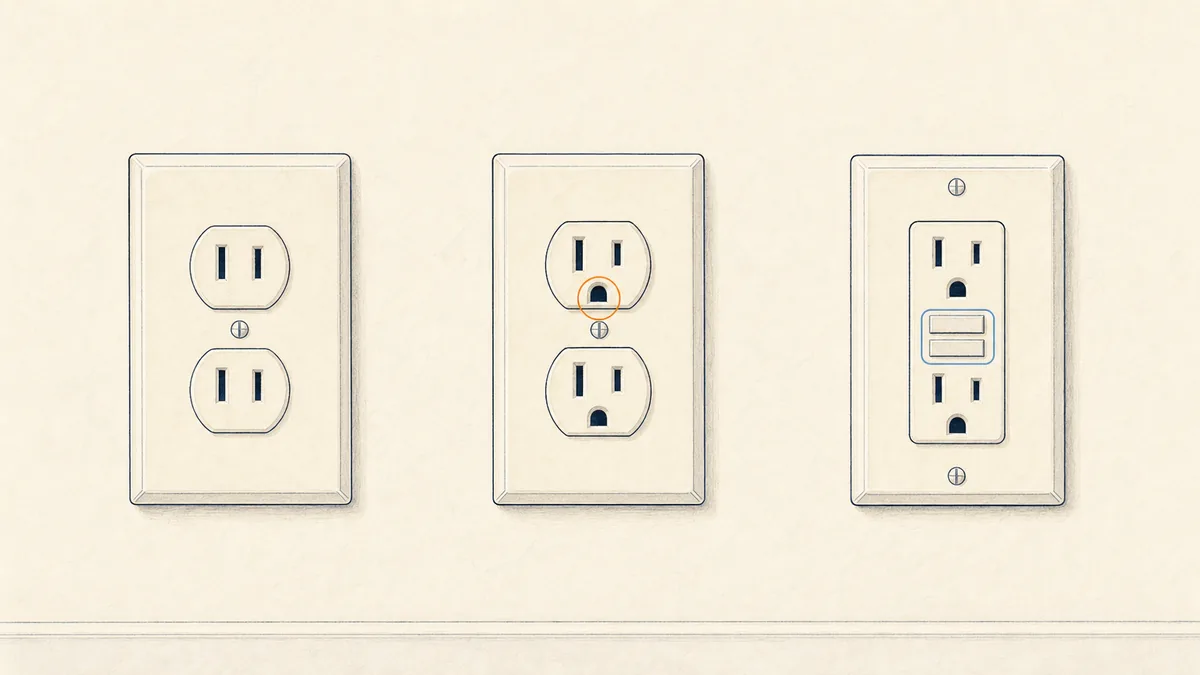
Simplified layout, not wiring instructions.
| What you see or read | What it tells you | What it cannot tell you |
|---|---|---|
| A two-slot receptacle | There is no grounding contact for a three-prong plug | Whether a usable grounding means exists behind it |
| A three-slot receptacle | The face accepts a grounding-type plug | Whether the grounding contact is properly connected |
| A GFCI device or protection label | Ground-fault protection is indicated | That an equipment grounding path exists |
| An “open ground” finding | An equipment grounding concern was reported at that location | The fault’s location, repair method, or condition of every other outlet |
Basic plug-in testers also have limits. Some detect common wiring errors without establishing the quality of the ground or identifying every incorrect connection. A reassuring light pattern is not a whole-system assessment. Homeowners do not need to remove outlet covers, insert meter probes, or open a panel to gather information for the electrician. The report’s wording, room locations, existing labels, and history of electrical work are useful starting points.
Can a GFCI protect an outlet without a ground?
A GFCI reduces shock risk by interrupting power when current leaving the circuit differs from current returning. It can provide this protection without an equipment ground. It does not create a grounding path. The GFCI fact sheet from the U.S. Consumer Product Safety Commission (CPSC) explains both the current-imbalance principle and the device’s limits.
Leave the correction method and any labeling to a licensed electrician, who must apply locally adopted electrical code and equipment instructions to the specific circuit. Simply swapping a two-slot face for a three-slot face does not ground the circuit. Never remove a plug’s grounding pin or use an adapter to bypass the appliance’s grounding requirement.
Grounding and protective devices have different jobs
These protections address different hazards. A house can have one and still need another.
| Protection | Main job | Important limit |
|---|---|---|
| Equipment grounding and bonding | Provide a continuous fault-return path that helps a breaker or fuse clear a fault | Do not prevent every shock or detect every dangerous fault |
| Ordinary circuit breaker or fuse | Interrupt excessive current from overloads and short circuits | Dangerous shock current can be too small to operate it |
| GFCI | Interrupt current imbalance to reduce ground-fault shock risk | Does not add an equipment ground or protect against every type of contact with electricity |
| Arc-fault circuit interrupter (AFCI) | Detect hazardous arcing conditions and interrupt power to reduce fire risk | Does not replace equipment grounding or required GFCI protection |
| Surge protective device | Limit brief voltage surges that can damage equipment | Does not repair wiring, bonding, or grounding defects |
The CPSC distinguishes arc-fault fire protection from ordinary overcurrent protection. For the device-choice questions, our AFCI vs. GFCI guide explains the separate protections. Our whole-house surge protection guide covers the equipment-protection decision without treating a surge device as a grounding repair.
When should an electrician inspect the grounding?
Act promptly on shocks or damaged equipment
If an appliance gives you a shock or a continuing tingle, stop using it and keep other people away until a licensed electrician has assessed it. Do not touch it again to reproduce the sensation. San José’s fire department includes mild shocks or tingling among its electrical warning signs and advises contacting a licensed electrician as soon as possible.
Scorching, damaged receptacles, buzzing, and repeated protective-device trips also need prompt professional attention. The CPSC’s home electrical safety checklist advises stopping use of unusually warm outlets pending an electrician’s assessment. These signs do not specifically diagnose a grounding problem. A ground fault, loose connection, damaged appliance, or another defect may be involved.
If there is smoke, fire, active arcing, or a burning smell suggesting an electrical fire, leave the home, stay outside, and call 911, following the CPSC’s home-fire safety guidance. Do not delay evacuation to investigate wiring or reach the panel.
Arrange a planned assessment when the safety path is uncertain
A licensed electrician’s assessment is useful when:
- A home inspection identifies open grounds, missing bonding, or questionable electrical alterations.
- Older two-slot outlets limit where equipment requiring grounding can be used.
- Three-slot receptacles were installed without records explaining the circuit work.
- A renovation, service change, plumbing replacement, or other project may have affected grounding or bonding connections.
- Flooding, corrosion, physical damage, or excavation has affected electrical equipment or a visible grounding connection.
Keep away from damaged wires and connections. Do not disconnect a clamp, move a conductor, or modify plumbing bonds to investigate.
For a planned electric vehicle charger, heat pump, or other large load, grounding is one part of the electrical assessment. It does not establish that the service has enough capacity. Keep grounding repairs, new-circuit work, and any proposed service upgrade as distinct items in the electrician’s explanation and quote.
What a grounding assessment and repair quote should cover
We recommend defining the concern before accepting a proposal described only as “ground the house.” That phrase can mean very different work.
Request a written scope that answers:
- Where is the problem? Name the affected receptacles, circuits, equipment, or service connections. Separate confirmed defects from areas that were inaccessible or outside the assessment.
- What needs correction? Distinguish the earth connection, bonding, equipment grounding continuity, receptacle protection, and damaged wiring.
- What will the repair accomplish? State which grounding, bonding, or protective function will be restored or added, and identify any limitations that remain.
- What is included? Identify circuit work, devices, labels, wall access and restoration, permits, inspection responsibility, and exclusions where relevant.
- What records will you receive? Include the findings, completed repair scope, and any required inspection approval.
For example, “add ground rods” and “provide an equipment-grounded circuit to the home office” address different parts of the system. A useful proposal explains which observed problem each item corrects. A new panel, more rods, or new receptacle faces should never stand in for that explanation.
When work requires a permit, the public inspection is a separate approval step. Our final electrical inspection guide explains that handoff and the records associated with it.
If your report flags an open ground or missing bond, arrange a licensed electrician’s assessment and use our electrical inspection cost guide to define the visit before authorizing repairs.